

How To Repair A Hole In A Rubber Sprinkler Hose
Bert spent 25 years working as a home-improvement and residential construction contractor in fundamental Florida.
Just as in that location is with many bug in life, there is more than than one mode to set up a broken sprinkler pipe. The appropriate method depends on the damaged section's location. For case, a clean suspension before the valve usually requires a hard pipage repair, while easier repair methods work fine when the damaged surface area occurs after the valve.
This guide will break down five different methods to repair a buried sprinkler pipe.
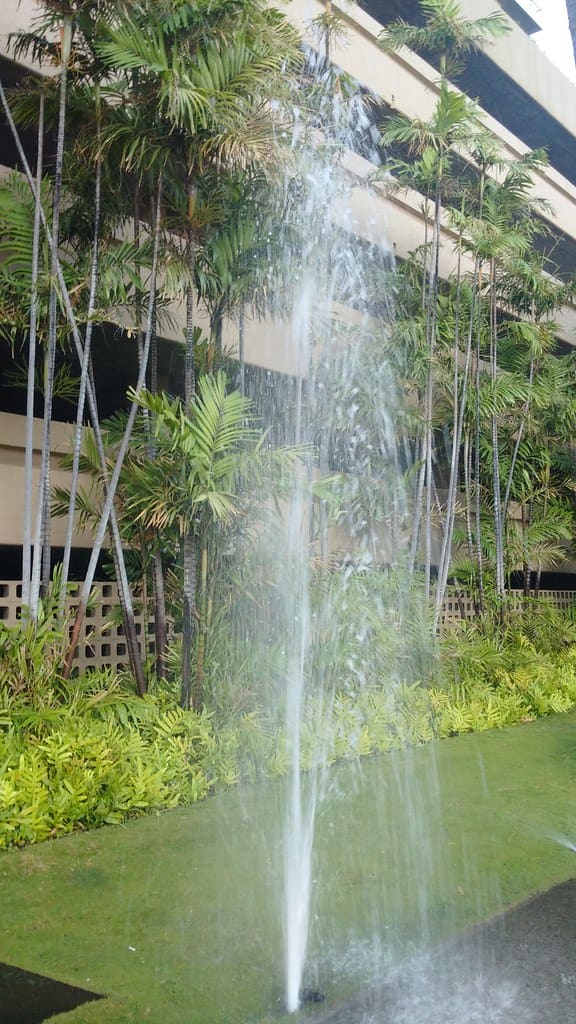
Geysers often erupt when a sprinkler pipe breaks earlier the zone valve.
https://world wide web.flickr.com/photos/scotnelson/
Locate and Expose the Damaged Piping
Finding the leak is sometimes the most difficult part of this project. Manifestly some leaks are easier to find than others, such as a geyser that rips through the soil. In less obvious cases, a homeowner may only notice a pressure loss at the end of a zone. In this state of affairs, turn on the leaking zone. Stand up back and compare the spray acme of each sprinkler head. If you see a loss in water pressure betwixt ii sprinkler heads, suspect a leak between these two heads. Go to the suspected area and look for overly saturated soil.
Remove the soil covering the broken sprinkler pipe with a shovel. When the tool's blade touches something hard, cease excavation with the shovel and expose virtually a two-foot-long section of the pipe with either your manus or minor trowel. Clear a four- to six-inch deep trench under the sprinkler line. This gives the water inside the pipe a place to drain.
Place the pipe size before shopping for repair fittings. The person at the hardware store does not know what size pipe yous have. Manufacturers print the piping size on the side of the pipe. Unfortunately this is often hard to read when on older cached pipe. If this is the case, wrap a slice of string effectually the pipe and make a mark where the cease meets. Get the hardware store and use the cord to identify the pipe size. If you lot experience the need to gamble on pipe size, choose 3/4 inch.
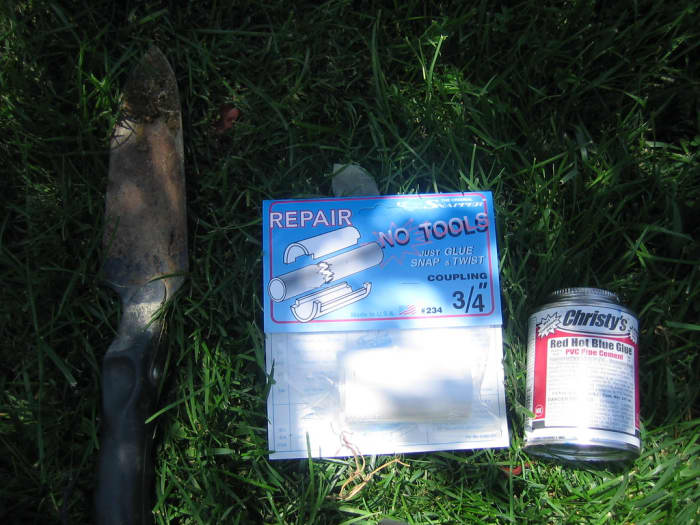
A saddle repair kit seals cracks or punctures in a PVC pipe without cutting out the damaged department.
https://www.flickr.com/photos/phuson/
Saddle Repair Kit
Irrigation repair technicians use a saddle repair kit to gear up a croaky department of straight pipe, such equally when someone punctures a sprinkler pipe with a shovel. The pieces in these kits hug pipage, not fittings; leaking fittings require a hard pipage repair. Some kits use a PVC saddle and cement, while others use a safety gasket and metal clamps.
PVC Saddle mode
- Wipe the damaged expanse with a rag to remove mud and dry it. If h2o continues to seep from the break, plow off the water source and remove the closest sprinkler head. This releases the water pressure from the pipe.
- Paint the pipe with a PVC cleaner or primer. Using a PVC cleaner or primer helps ensure the repair kit bonds permanently onto the pipe.
- Utilise a liberal amount of cement to both the pipage and the repair kit.
- Position the kit'south pieces over the damaged area and snap them together. Let the cement dry out, using the time recommended past kit manufacturer every bit a guide, before leak testing.
Clamp Style
- Make clean the surface of the damaged pipage with a rag. Remove all dirt and debris.
- Slip the clamp over the damaged area of the pipe. Position the clamp's rubber gasket over the damaged expanse.
- Assemble the clamp. Tighten the clamp's bolts with the correct sized wrench. Turn on the water source to check for leaks.
Scroll to Go on
Read More From Dengarden

A pre-assembled flexible coupling
Flexible Coupling
Many homeowners dear the copse in their g. Unfortunately, every bit the roots grow, they push up on whatsoever irrigation pipes running to a higher place them. Eventually the tension causes the pipe to crack and leak. The root's up force creates uneven pipes that sit at odd angles to each other, making a hard pipe repair difficult. To make matters worse, removing the offending root tin harm or kill the tree. A flexible coupling solves this consequence without cut the roots.
- Lay the flexible coupling on the damaged pipe and center it over the carve up in the pipe. Use the coupling to determine where to cut the pipe and marker the pipe with a pencil at the appropriate spots.
- Cut pipe on the pencil marks with PVC cutters. Remove any burrs with a knife.
- Allow the h2o bleed from the pipe. Dry and clean both ends of pipe with a rag.
- Apply a liberal amount of wet-or-dry PVC cement to the both ends of the flexible coupling and the sprinkler pipe. Quickly move to the next step.
- Skid both ends of the coupling over their corresponding pipe ends. Twist the coupling back and along about 1/4 to 1/2 plough. Let the cement dry, using the manufacturer's instructions as a guide, and so leak test the repair.

Some technicians use a PVC pinch plumbing equipment as a no-cement repair plumbing equipment.
Compression Coupling
Irrigation repair technicians looking for a no-glue fitting often choose to apply a PVC compression coupling, sometimes called a dresser coupling. A PVC compression fitting uses rubber gaskets as a mechanical sealant. When the technician tightens the plumbing equipment'due south nuts those nuts force the rubber rings into the void between the piping's outer surface and the fitting. If the plumbing equipment leaks, the technician simply tightens the nut another half turn. Unfortunately, a PVC dresser fitting should non be used on a constant pressure pipe, such equally the piping feeding the valve. In that example, option a different repair method.
- Remove most two inches of pipe. This cut does not need to exist verbal, just close.
- Slide both dresser nuts over their respective ends of the pipe.
- Work both prophylactic bushings onto their respective pipe ends. Push button one rubber bushing about five inches away from the cut end of the piping. Position the second prophylactic bushing nigh 1 inch from the end of its pipe.
- Sideslip i end of the dresser coupling over the pipe with the bushing placed five inches from the end. Continue to adjust the fitting until the free end clears the remaining piping.
- Position the end of the compression fitting against the safety bushing that sits one inch away from the pipe. This should center the coupling over the two-inch gap.
- Slide the distant bushing toward the coupling until it touches the plumbing fixtures. Both rubber bushings should now touch the fitting. Tighten both nuts with a wrench.
- Turn the water pressure on and leak test. If the plumbing equipment leaks, place one wrench on the coupling and a 2nd on the leaking nut. Agree the coupling however and turn the nut approximately one half turn. Repeat as necessary.

An expandable coupling works well in tight spaces.
Expanding Coupling
An expanding coupling, sometimes chosen a telescopic coupling, works well when replacing a leaking fitting located in a tight infinite, such every bit within a valve box. The stationary end of this fitting attaches directly to a department of pipe and the plumbing equipment's movable shaft slides into some other piping fitting. Occasionally a repair technician completes a hard-pipe repair with an expandable coupling; nonetheless, this situation rarely happens due to the fitting's high cost.
- Fully expand the coupling and measure its length. Decrease ii inches from the measurement and transfer the calculation to the leaking sprinkler pipe.
- Cut the sprinkler line at the advisable spot with PVC cutters. Let the water draining from the pipe absorb into the ground before continuing.
- Wipe the PVC pipe in the repair area with a dry rag. Removing all the dirt and debris from the pipage helps ensure a leak-free connectedness.
- Attach a PVC plumbing fixtures to the end of the pipage that accepts the expanding coupling's shaft. The type of plumbing fixtures depends on the repair. If the shaft connects to a threaded valve port, coat a male plumbing equipment'south threads with thread tape earlier installing it on the valve. If the shaft slides into a coupling or other fitting, utilise PVC cement to both the pipage and fitting. Install the fitting on the pipe, using a twisting motility.
- Fully shrink the expanding coupling.
- Use cement to both the PVC piping and the expandable fitting'due south coupling end.
- Mount the expanding coupling onto the pipage, using a twisting motility. The twisting motion blends the cement.
- Cover the shaft's mating terminate and its plumbing equipment with PVC cement. Quickly slide the shaft into the plumbing fixtures. Rotate the shaft back and forth slightly. Follow the cement manufacturer'southward recommended curing fourth dimension before leak testing.
Hard Pipe Bridge
Occasionally information technology makes sense to build a difficult piping bridge using PVC pipe and fittings, such as when a sprinkler line passes over multiple growing tree roots or when the leak is located in an expanse too small for other methods. The verbal type and amount of fittings needed depends on the situation, however, nigh pipage bridges utilize four 90-degree fittings and a section of pipe.
- Dig a ditch beyond the unabridged repair area. This exposes all obstacles.
- Cut the pipe on both ends of the repair with PVC cutters. Permit the water drain from the pipe and soak into the soil. Dry and clean the pipage ends with a dry rag.
- Attach a ninety-caste fitting to one buried sprinkler pipe with PVC cement. Turn the plumbing equipment until its open port faces up. Echo this on the other buried pipe. Both xc-degree fittings must face the same management.
- Cut two risers from a length of PVC pipage. The length of the risers depends on the amount of height needed to clear the obstacle. It sometimes helps to lay a scrap slice of pipage on the obstruction in the trench and measure the distance from the bottom of the fleck to the elevation of the buried pipe. Try to continue the risers as small as possible. Cement a 90-degree plumbing equipment onto each riser.
- Measure out the length of the removed section of pipage. Transfer this measurement to a new piece of pipe and cut at the appropriate spot.
- Attach one of the 90-caste fitting on one riser to the new pipe with PVC cement. Cement the xc-degree fitting on the remaining riser to the pipe's other end. Twist the 90-degree plumbing fixtures until the second riser'due south position matches the first.
- Use a liberal amount of PVC cement to both of the 90-caste fittings connected to the cached sprinkler pipe. Position the bridge in the trench and slip a riser into each buried fitting. Press the risers into their respective fittings. Let the cement cure completely before leak testing.
This article is accurate and truthful to the best of the author's knowledge. Content is for advisory or entertainment purposes only and does non substitute for personal counsel or professional advice in business, fiscal, legal, or technical matters.
© 2022 Bert Holopaw

How To Repair A Hole In A Rubber Sprinkler Hose,
Source: https://dengarden.com/home-improvement/How-to-Repair-a-Buried-Sprinkler-Pipe
Posted by: kimberlincren1949.blogspot.com
0 Response to "How To Repair A Hole In A Rubber Sprinkler Hose"
Post a Comment